
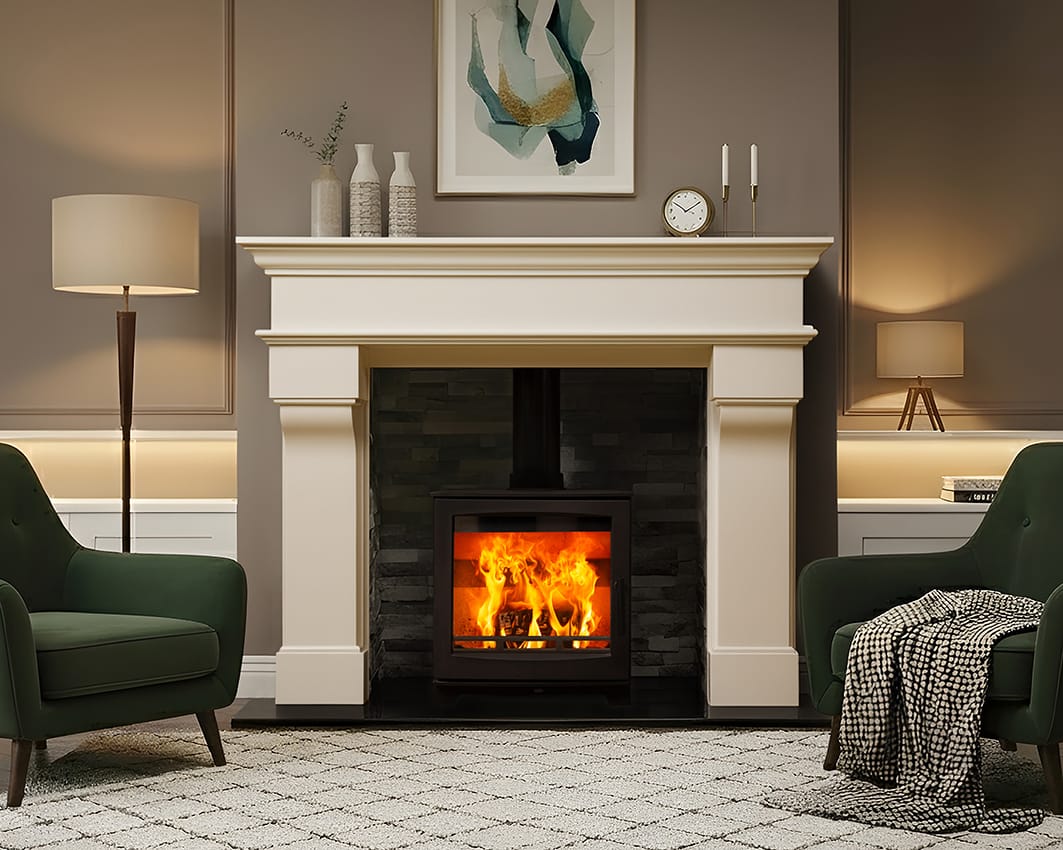
Miller Wholesale Guide · Newtownstewart, Co. Tyrone
Wood burning and multi-fuel stoves in Northern Ireland
Which fuel type suits your home, how to size a stove properly in kilowatts, what Ecodesign actually changed, and how a stove goes from showroom floor to a lit fire in your living room. Written by a second-generation family business trading over 40 years.
The short answer
A wood burning stove burns wood only, on a flat bed of ash. A multi-fuel stove has a raised grate and an ashpan, so it can also burn approved smokeless fuels. If you have reliable access to dry seasoned logs, a wood burner is cleaner and simpler. If you want the option of solid fuel, or you are in a part of Northern Ireland where wood supply is less certain, multi-fuel gives you flexibility. Everything else follows from getting the heat output, in kilowatts, right for the room.
Fuel type
Wood burning, multi-fuel or electric?
This is the first decision and it narrows everything after it. The difference between a wood burner and a multi-fuel stove is not marketing. It is the grate.
| Consideration | Wood burning | Multi-fuel | Electric |
|---|---|---|---|
| Firebed | Flat bed, air fed from above | Raised grate and ashpan, air fed from below | No fire, no fuel |
| Fuel | Dry seasoned wood only | Wood plus approved smokeless fuels | Mains electricity |
| Flue or chimney | Required | Required | Not required |
| Heat feel | Radiant, lively flame | Radiant, longer burn on solid fuel | Convected or fan heat, flame effect |
| Ash handling | Leave a bed of ash to burn on | Riddle and empty the pan regularly | None |
| Best suited to | Homes with a reliable log supply | Homes wanting fuel flexibility | Rooms with no chimney, apartments, rentals |
Ash matters more than people expect. Wood burns better sitting on its own ash, which is why a wood burner has a flat bed. Solid fuel needs air underneath it, which is why a multi-fuel stove has a grate and a pan. Run a wood burner like a multi-fuel and you will riddle away the ash bed it needs.
Wood burning
The purist option. A livelier flame picture, less ash to deal with, and the cleanest burn when the wood is genuinely dry.
Multi-fuel
The practical option in much of Northern Ireland. Solid fuel holds a fire overnight better than wood, which matters in a main living room.
Electric
No flue, no fuel, no ash. The answer where there is no chimney, or where a room needs the look of a fire without the building work.
Atlantic · Harbour
A stove is the one thing in a room people actually watch.
Flame picture, glass size and the way the door frames the fire all matter as much as the heat figure on the spec sheet. Worth seeing lit before you choose.
Heat output
What size stove do you actually need?
Stove heat output is measured in kilowatts, and this is where most people go wrong. The instinct is to buy big. The result is a stove that has to be run slowed down and starved of air all winter to stop the room becoming unbearable.
A common rule of thumb is to divide the room volume in cubic metres by 14. Measure length by width by height, divide by 14, and you have a rough kilowatt figure to start from. A room five metres by four with a 2.4 metre ceiling gives 48 cubic metres, which points at roughly a 3.5 kW stove.
Treat that as a starting point and nothing more. Insulation, ceiling height, how many external walls the room has, whether it opens into a hallway or a kitchen, and how draughty an older property is all pull the number around. Bring your measurements to the showroom and the team will work it through with you.
An undersized stove run properly hot burns cleanly and gives good heat. An oversized stove permanently damped down burns dirty, tars the glass, coats the flue and wastes fuel. Too small is the recoverable mistake.
| Output | Typically suits | In the Atlantic range |
|---|---|---|
| 4 kW | Small snugs, bedrooms, well-insulated rooms | Pearl 4, Oyster 4 |
| 5 kW | The most common size for an average living room | Pearl 5, Pearl 5 Wide, Oyster 5, Shore 5 |
| 7 kW | Larger living rooms, older or draughtier properties | Shore 7 |
| 8 kW | Big rooms, high ceilings, part open-plan spaces | Pearl 8, Oyster 8 |
| 10 kW | Large open-plan living, or where a boiler model is used | Pearl 10 |
Model numbers in the Atlantic range indicate nominal heat output, so a Pearl 5 is a 5 kW stove. Confirm exact outputs, dimensions and clearances with the Miller Wholesale team before ordering.
The Atlantic range
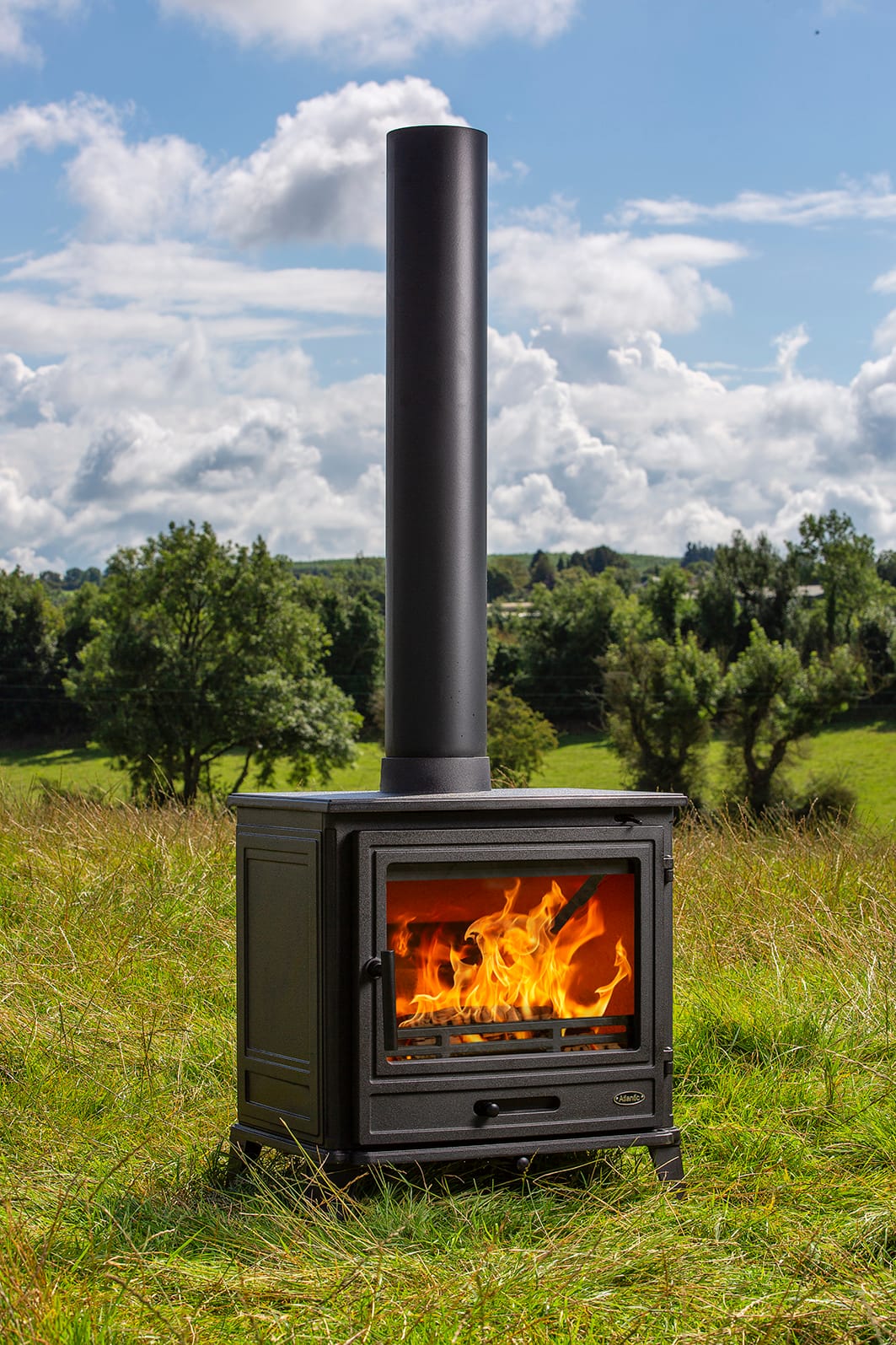
Stoves photographed where they belong
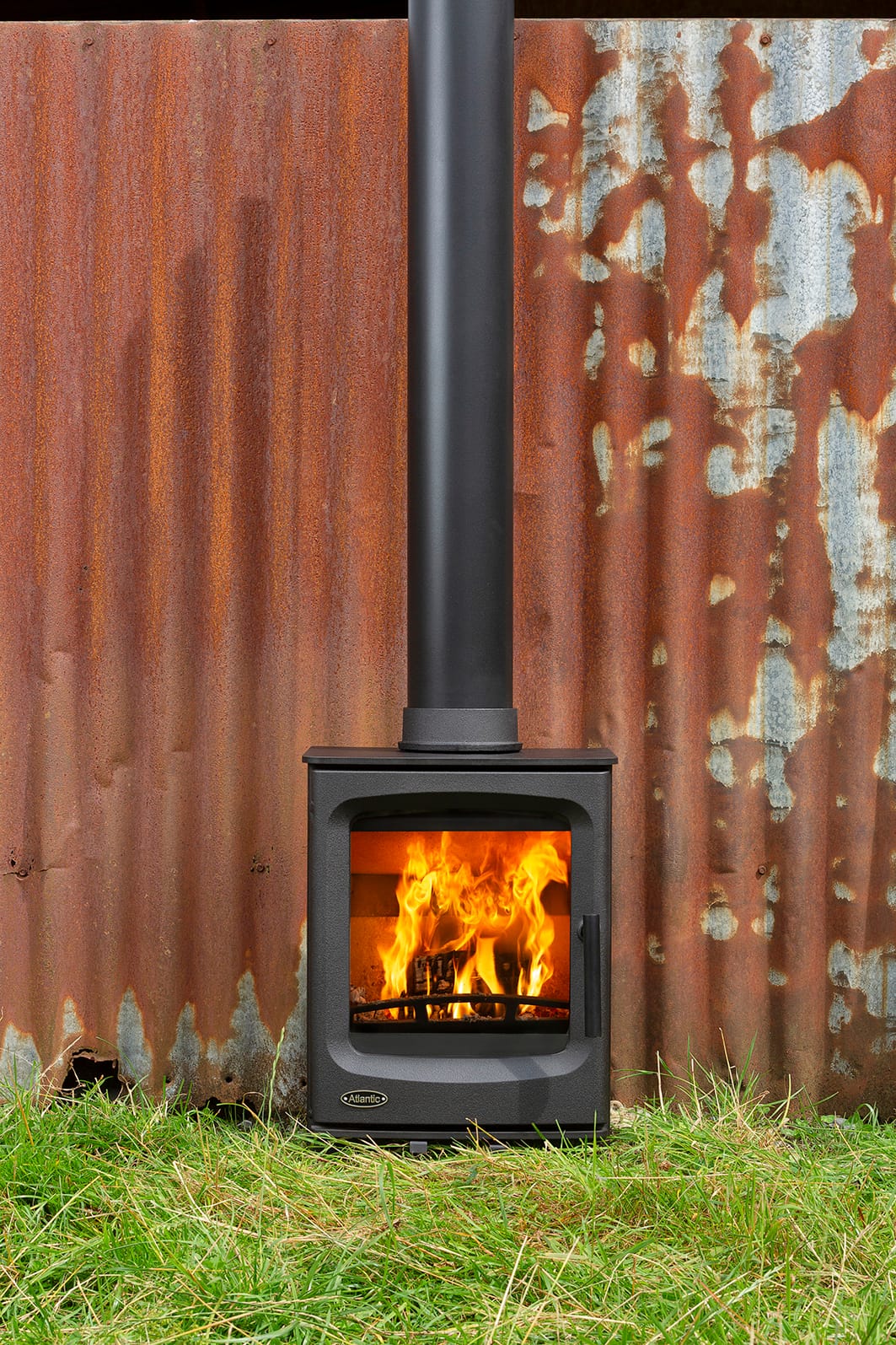
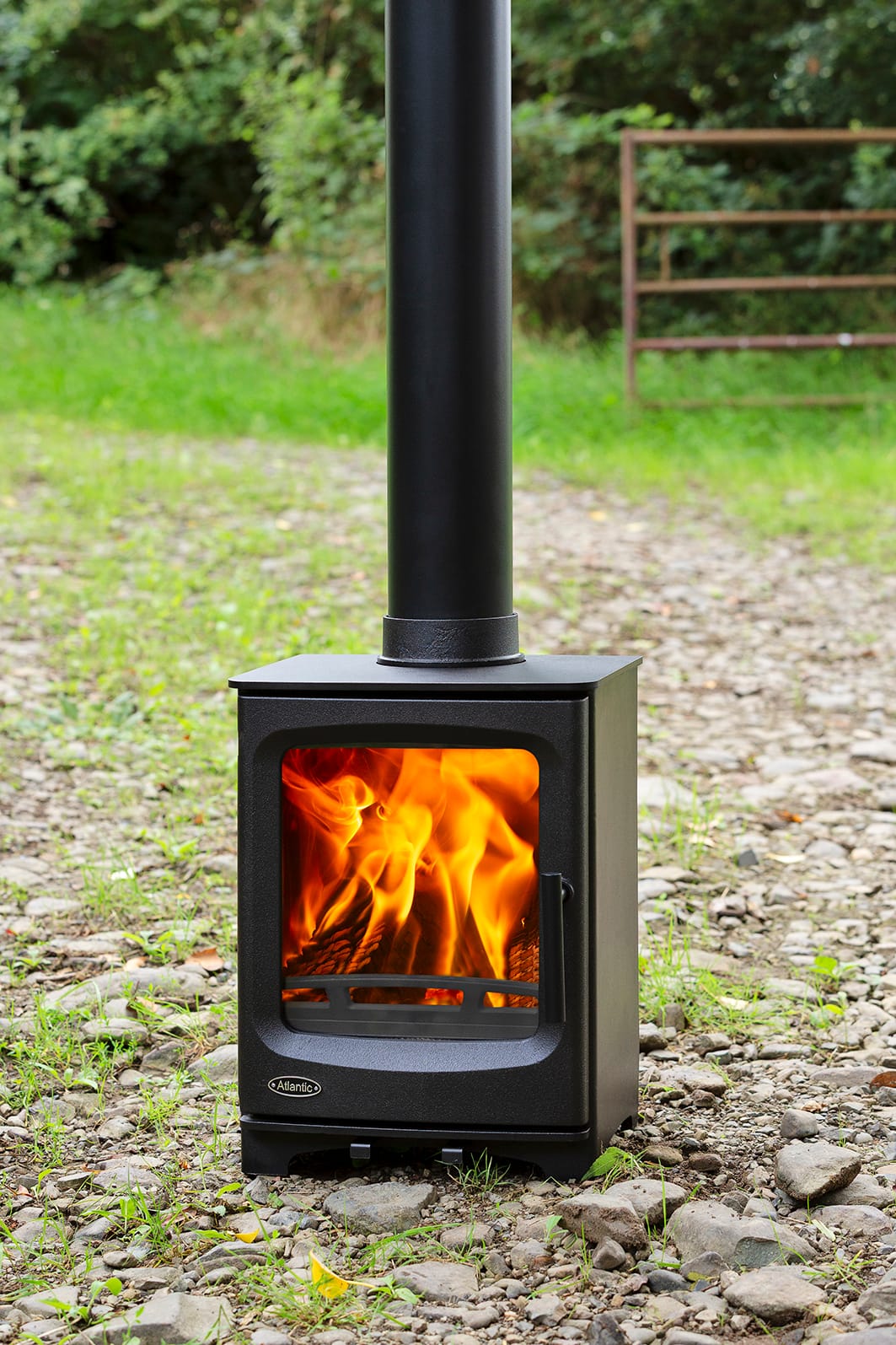
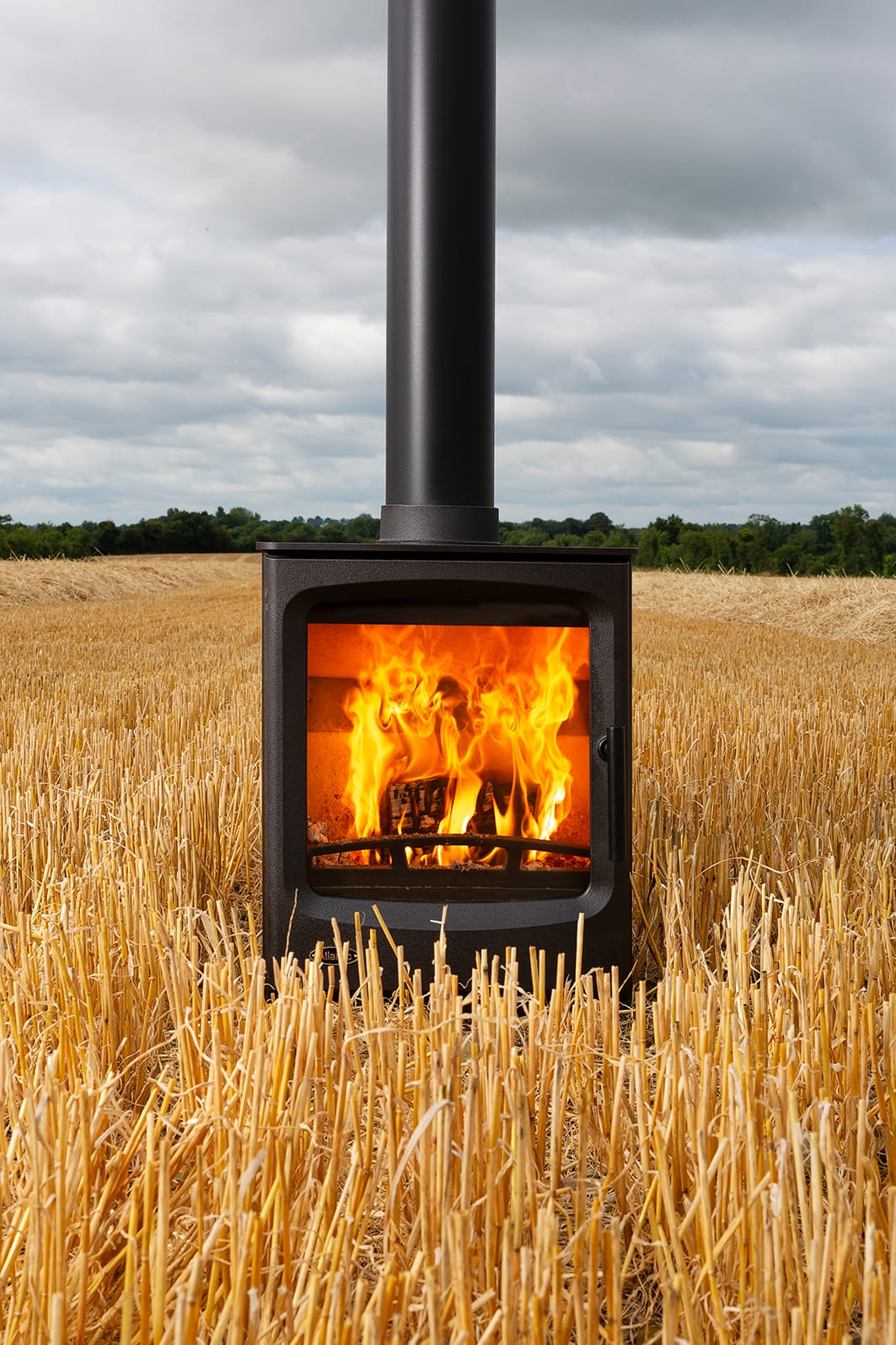
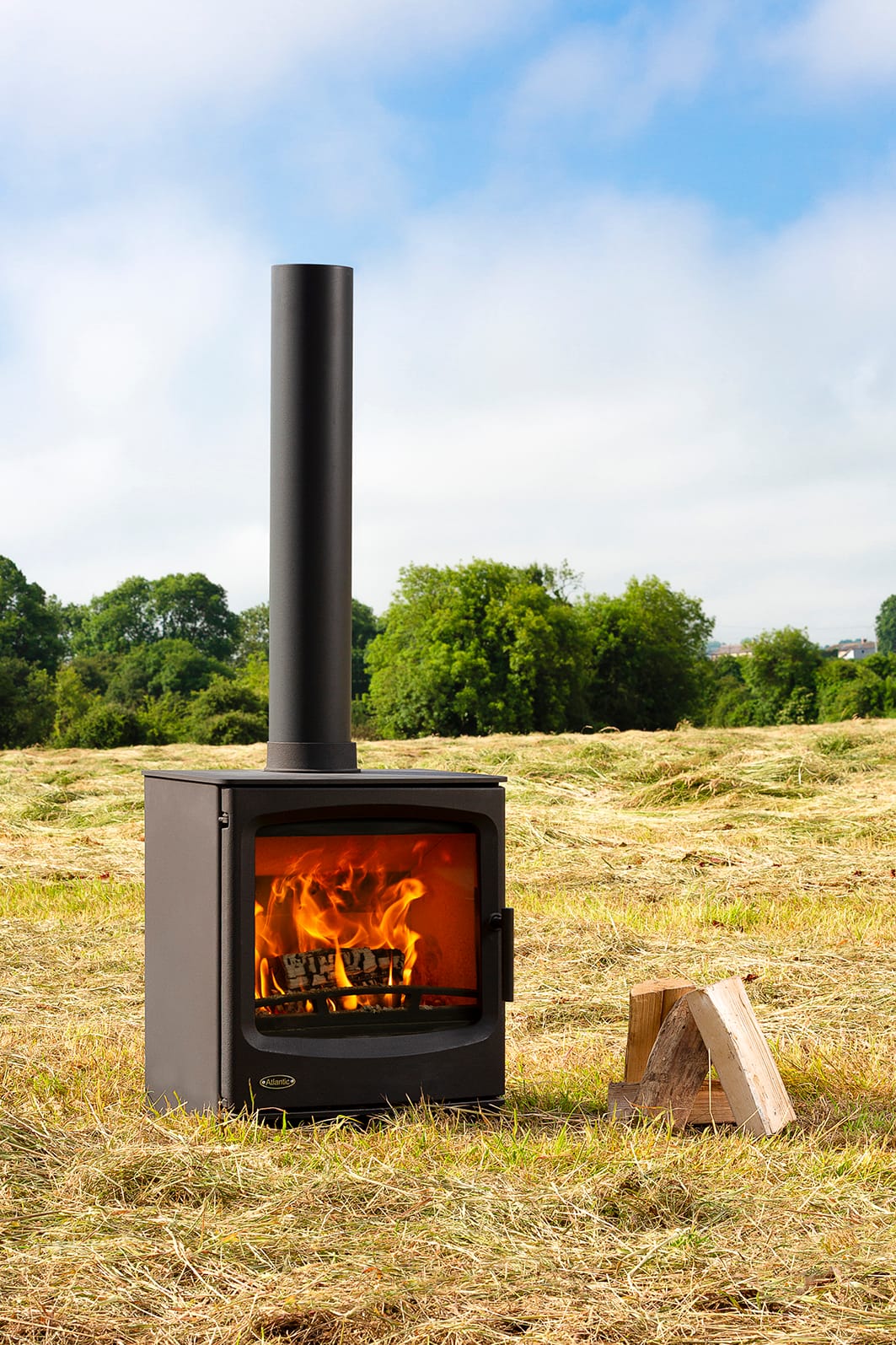
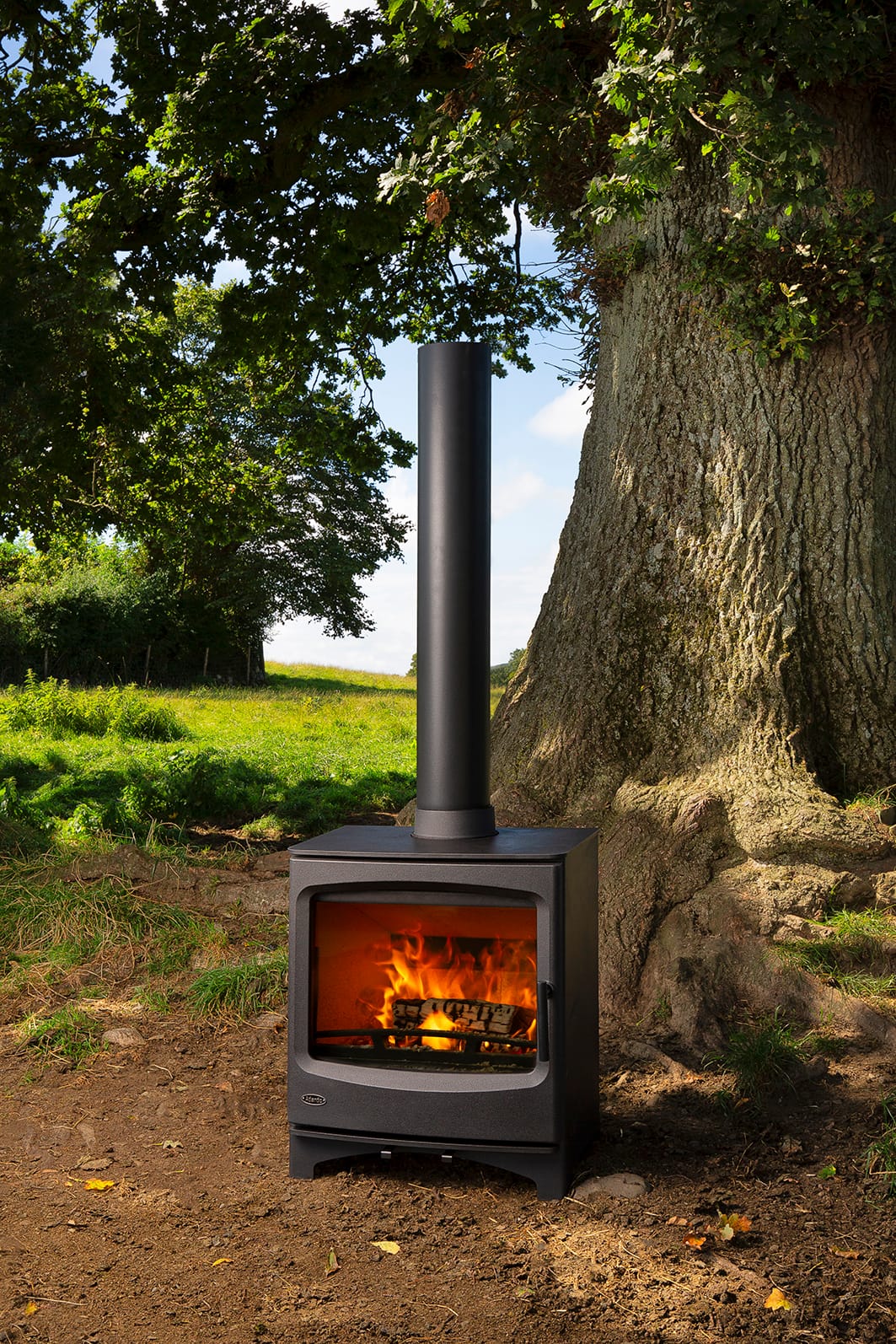
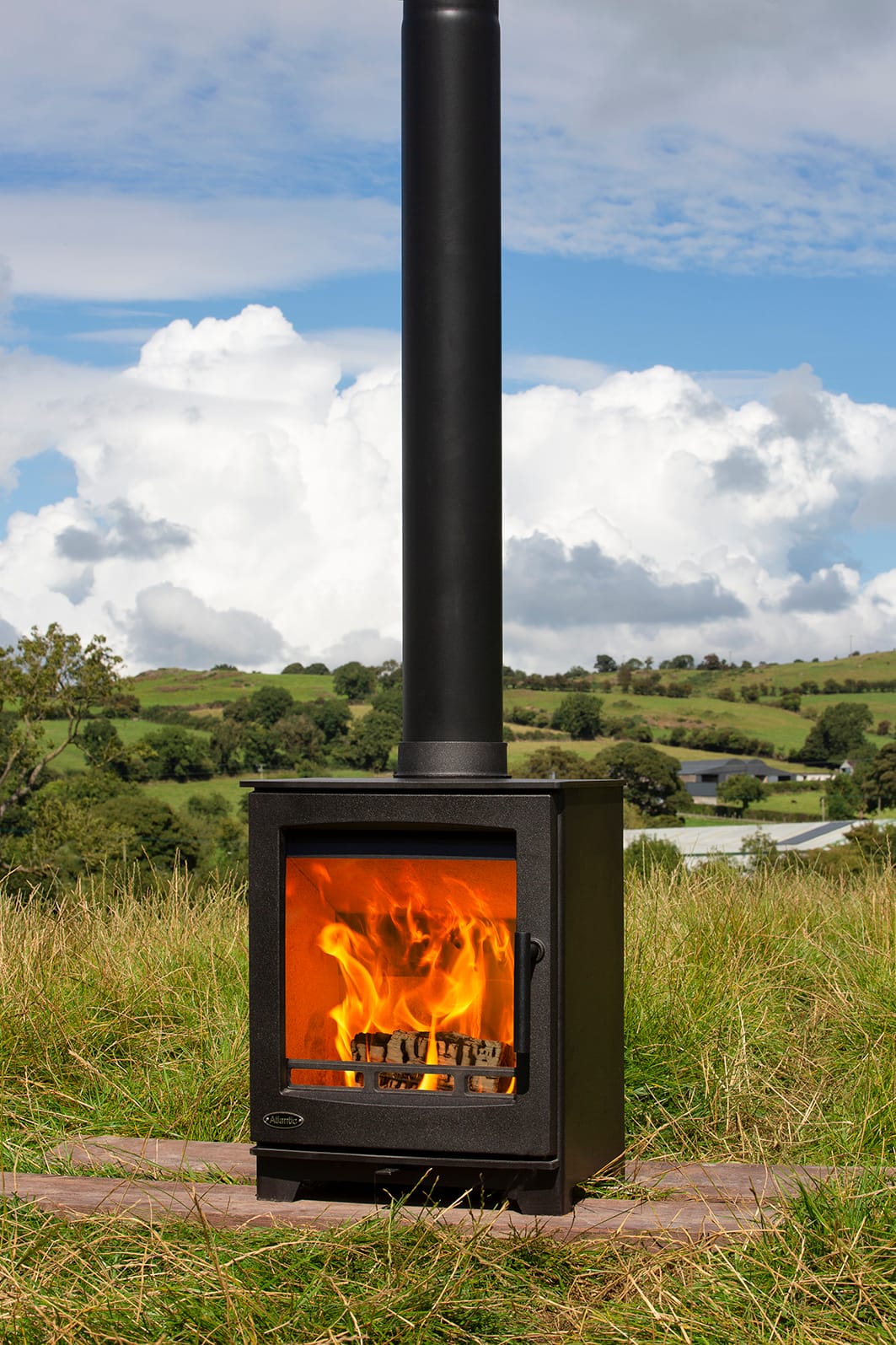
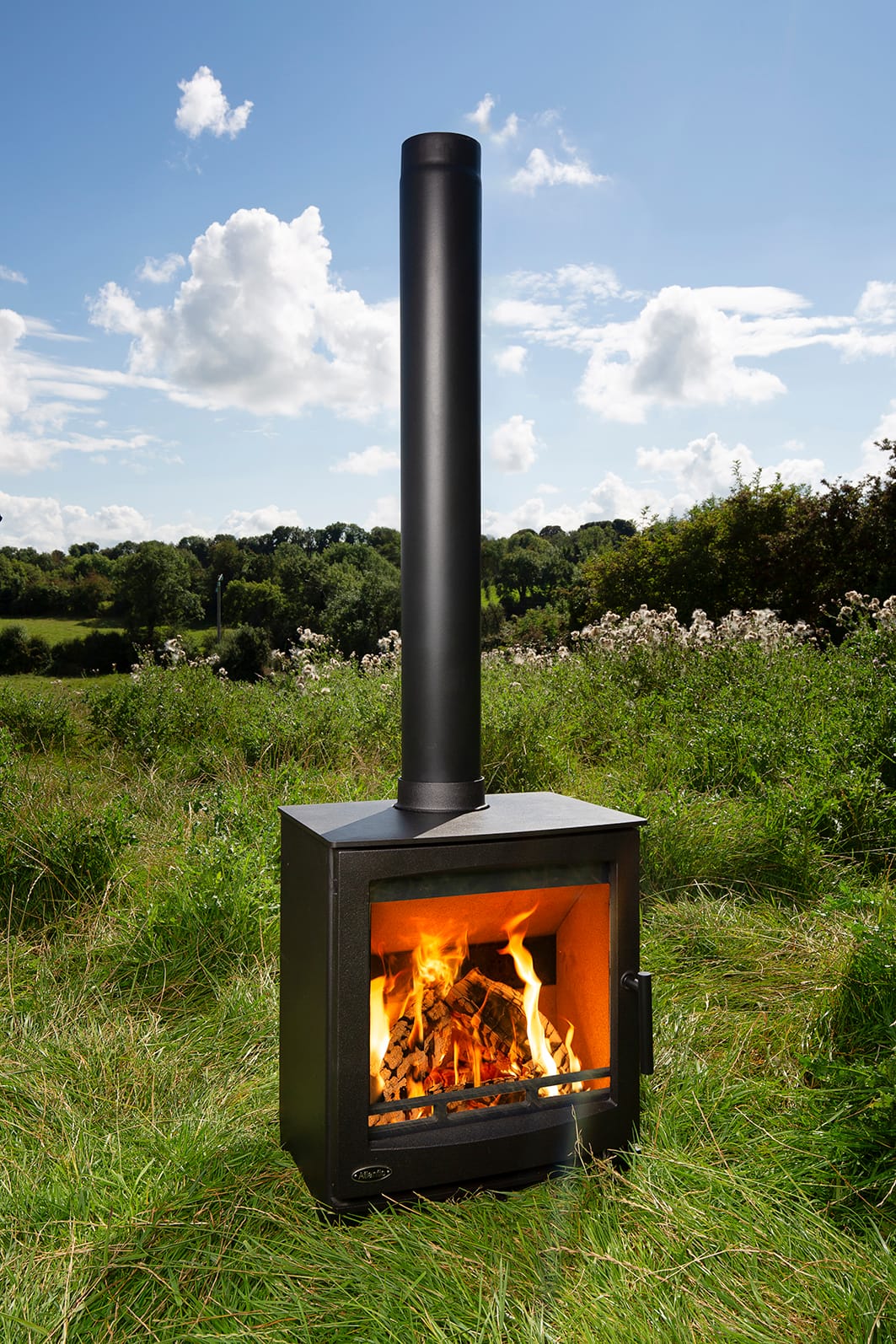
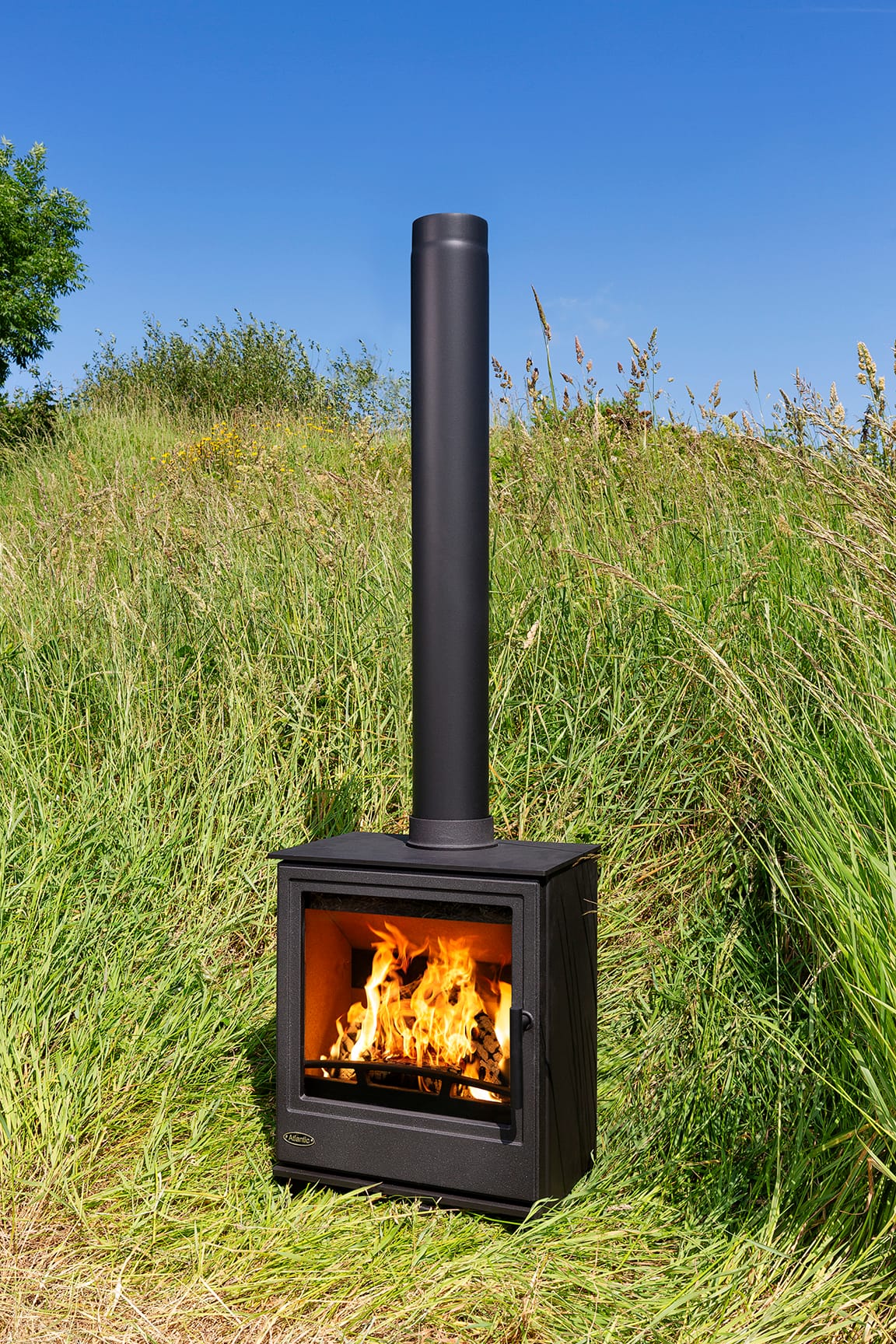
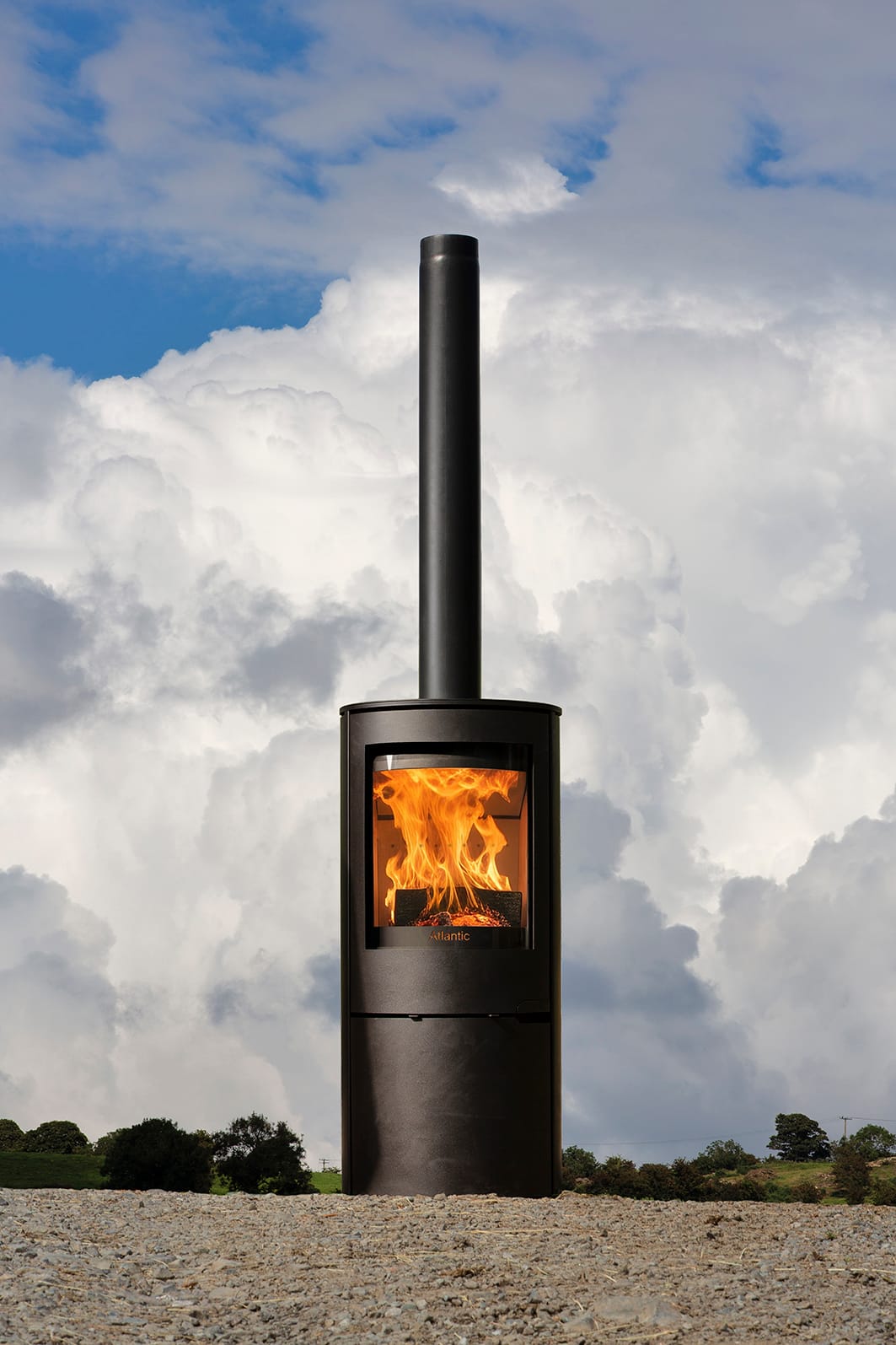
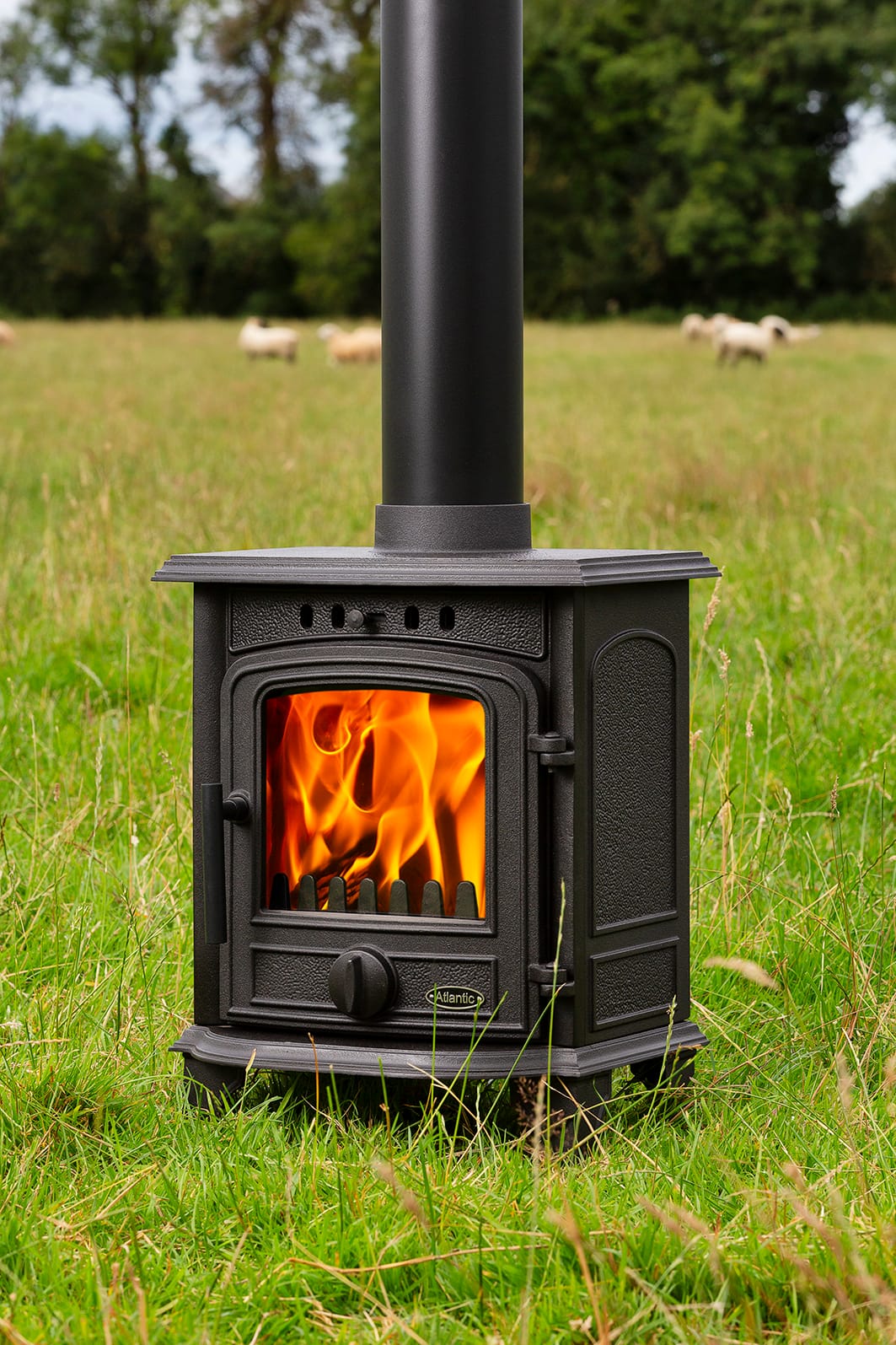
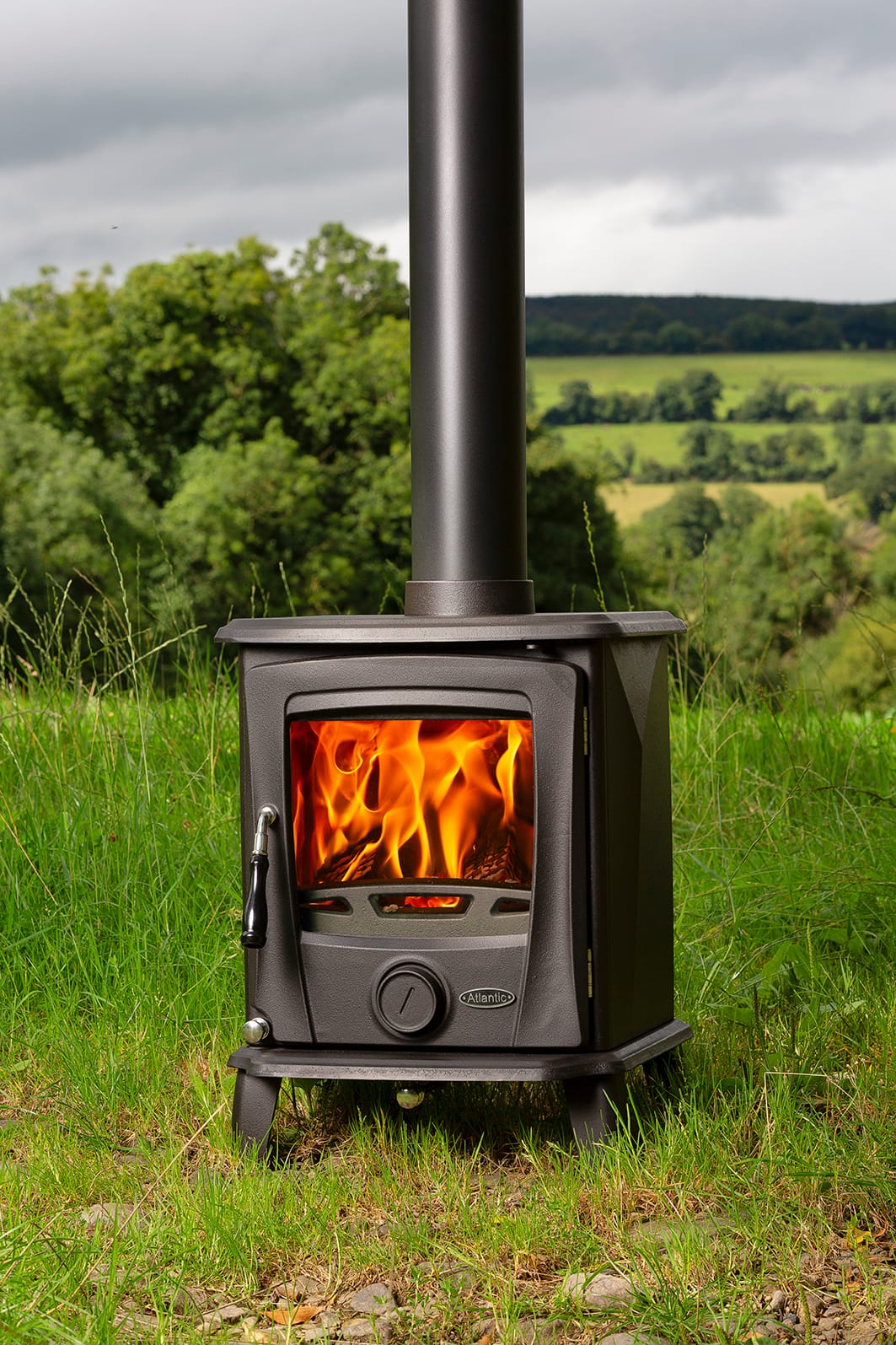
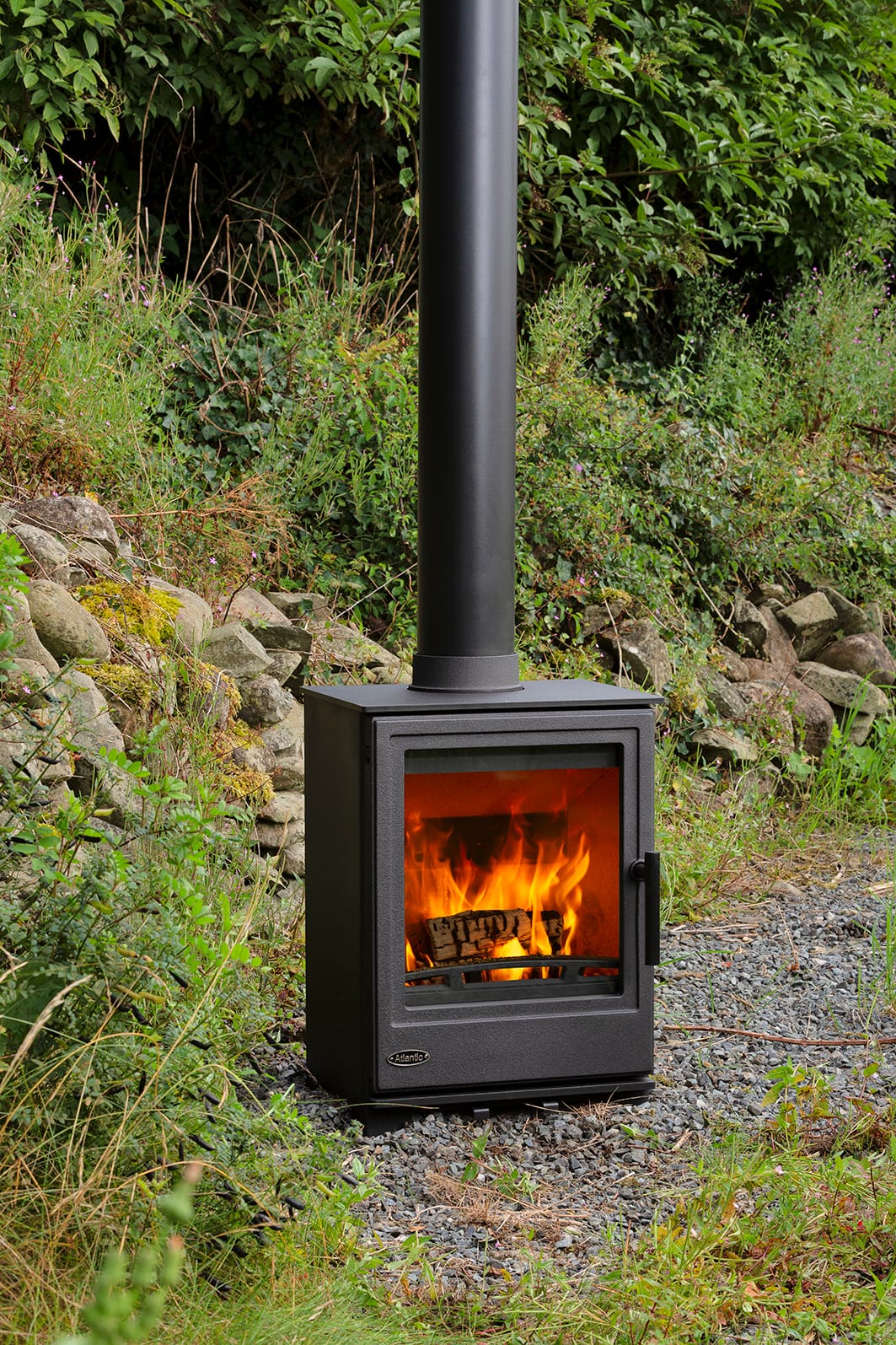
The Atlantic range covers compact 4 kW stoves through to 10 kW models, in traditional and contemporary bodies. These are the actual stoves, shot outdoors and lit, so you can judge proportion and flame rather than a studio cut-out.
Regulation
Are stoves being banned? No. But the rules changed.
Stoves are not banned and there is no plan to ban them. What changed is that new stoves sold in the UK must meet Ecodesign standards, which set limits on emissions and a minimum efficiency. A modern Ecodesign appliance burning dry fuel is dramatically cleaner than a twenty-year-old stove burning wet logs.
The other half of it is fuel. Wet or unseasoned wood is the biggest single cause of smoke, tarred glass and a chimney that needs sweeping twice as often. Dry seasoned wood below 20 per cent moisture, or an approved smokeless fuel, is what these stoves are designed around.
Smoke control rules and installation requirements vary by area and property. Ask the team what applies where you live before you commit to an appliance.
Fireplaces and surrounds
The stove is half the decision. The surround is the other half.
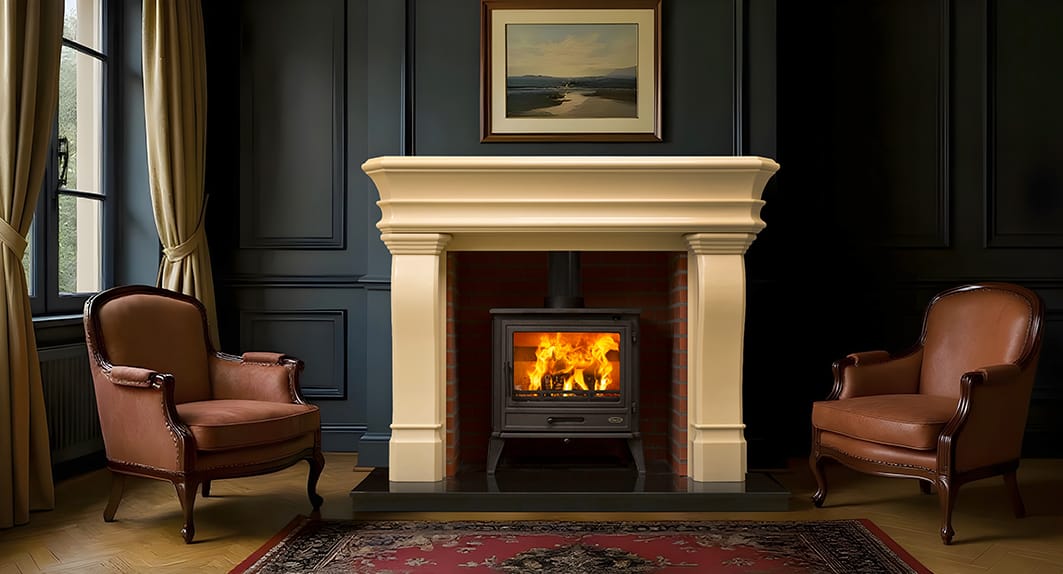
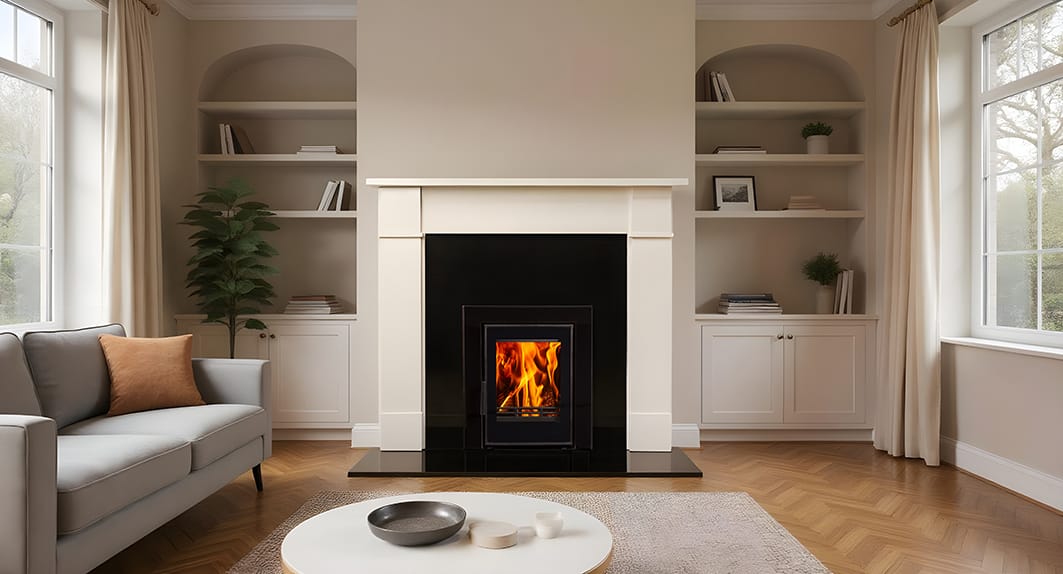
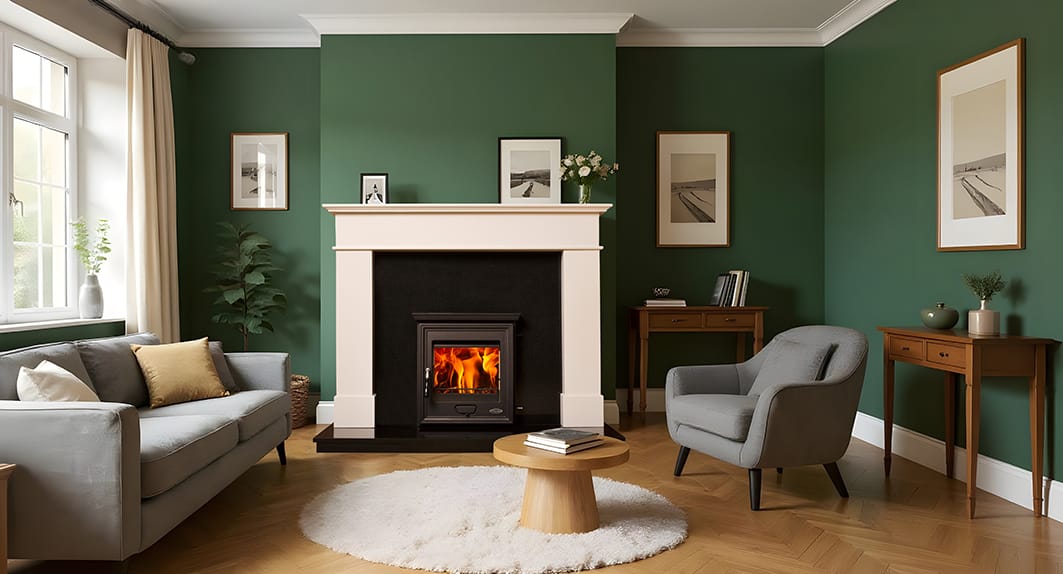
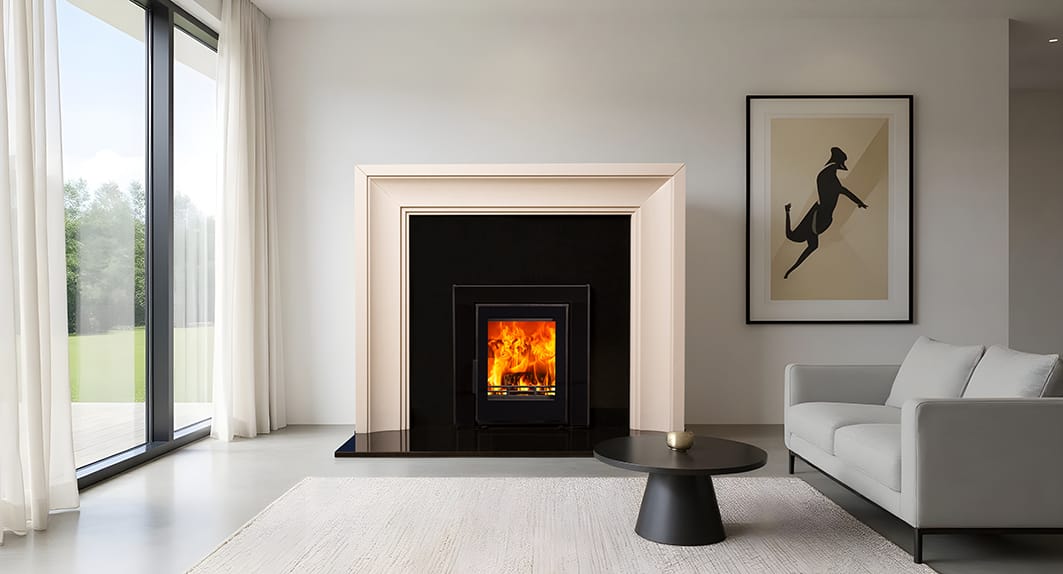
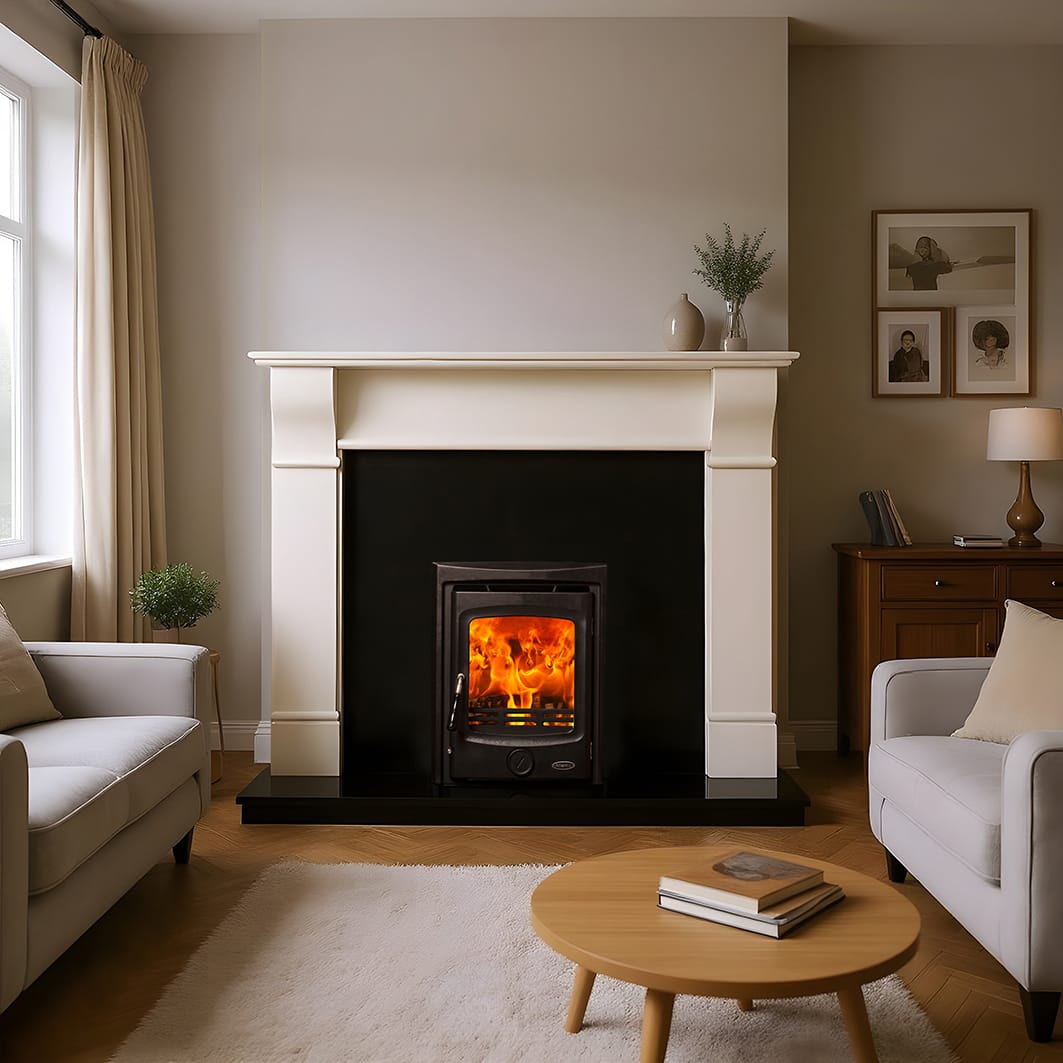
A stove sitting in a bare opening and the same stove set into a considered surround are two completely different rooms. Mantel, hearth, chamber lining and the proportion between them decide whether the fire reads as a feature or an afterthought.
Freestanding
The stove stands in the chamber with the flue visible. The most flexible option and the easiest to service.
Inset
Built into the wall so the front sits flush. Neat and space-saving, but it needs the opening planned before the build.
Surround and hearth
Mantel material, chamber lining and hearth depth all change how the stove reads. Best decided together, not one at a time.
From showroom to lit fire
How a stove project actually runs
Buying the stove is the quick part. What determines whether it works properly is the survey, the flue and the fitting.
Room and measurements
Room dimensions, ceiling height, insulation and layout. Bring photographs of the existing opening or chimney breast.
Fuel and output
Wood, multi-fuel or electric, and the kilowatt figure that suits the room rather than the one that sounds impressive.
Chimney and flue
Existing chimney, lined flue or twin wall system. This is the part that most often decides what is actually possible.
Stove and surround
Chosen together so proportions work: mantel, chamber, hearth and the stove sitting in it.
Installation
Fitted by a competent installer, with hearth, clearances, ventilation and flue done to the requirements that apply.
Running it well
Dry fuel, a hot fire rather than a smouldering one, and a swept chimney. Most stove problems trace back to one of those three.
Miller Wholesale supports installers and builders alongside homeowners, with a hardware counter and plumbing and electrical supplies in the same building as the stove showroom.
Why Miller Wholesale
Forty years of getting people warm in Tyrone and beyond
Miller Wholesale is a second-generation family business in Newtownstewart, just outside Omagh. What started as a hardware counter is now a tile and bathroom emporium with a stoves showroom attached, serving Tyrone, Derry, Donegal, Antrim and the wider region.
The advantage of a showroom is simple: you can stand beside a 5 kW stove and a 8 kW stove and see the difference in proportion, look at surrounds against real mantels, and ask someone who has specified hundreds of these what will work in a room like yours.
Alongside the Atlantic range we carry Heta, Stovax and other recognised names, plus electric fires for rooms with no chimney. Browse the stoves and fireplaces range or come and see them lit.
- Wood burning, multi-fuel, pellet and electric options
- Fireplaces, surrounds and hearths
- Showroom advice for homeowners and specifiers
- Hardware counter and trade supply in the same building
- Open until 8pm every Thursday
FAQs
Stove questions we get asked most
What is the difference between a wood burning stove and a multi-fuel stove?⌄
What size stove do I need for my room?⌄
Is it better to buy a stove that is too big or too small?⌄
Are wood burning stoves being banned in Northern Ireland?⌄
What can you burn in a multi-fuel stove?⌄
Do you supply and install stoves across Northern Ireland?⌄
Visit Miller Wholesale
Bring your room measurements. We will size it with you.
See the Atlantic range, plus Heta, Stovax and electric fires, in our Newtownstewart showroom near Omagh. Open Monday to Friday, and until 8pm every Thursday.
Miller Wholesale · 70 Dublin Street, Newtownstewart, BT78 4AG · 028 8166 1418